
How to Incentivize Cross-Selling

The Cross-Selling Paradox
Firms preach cross-selling but reward individual performance. As a result, teams stay in silos. A handful of Managing Directors (MDs) do a great job, but as the firm grows it needs to rely less on rainmakers.
Cross-selling should be easy, but data limitations, cultural silos, unclear accountability and competing messages often get in the way.
Many firms jump straight to monetary incentives - discrete cash payouts for cross-sales, beyond normal revenue-based compensation. This can produce material short-term results, but firms should prioritize non-monetary incentives if they want higher firm valuations and lasting change.
Why Cross-Selling Matters to Enterprise Value
Cross-selling increases the value of a professional services firm. All else equal, investors view firms that have a greater share of their revenues represented by cross-selling as:
- More diversified: Less reliant on any single service line
- More scalable: Proven ability to expand relationships across clients
- Stickier: Greater client retention and switching costs
- Higher margin: Lower customer acquisition costs (CAC)
- Lower risk: Broader revenue base and repeatable growth capabilities
This directly impacts common valuation model inputs such as CAC efficiency, organic growth rates, and EBITDA margin, leading to materially higher enterprise valuations.
Talent also recognizes this value and sees greater opportunities for success.
Which Incentives are Best
Firms realize greater enterprise value from cross-selling when collaborative behaviors are expected to endure. Investors care less about short-term spikes if they believe momentum might fade. Similarly, top talent will prefer a platform where collaboration is truly part of the firm’s culture.
Pay-for-Performance (Monetary) Rewards Jumpstart Action, then Fizzle
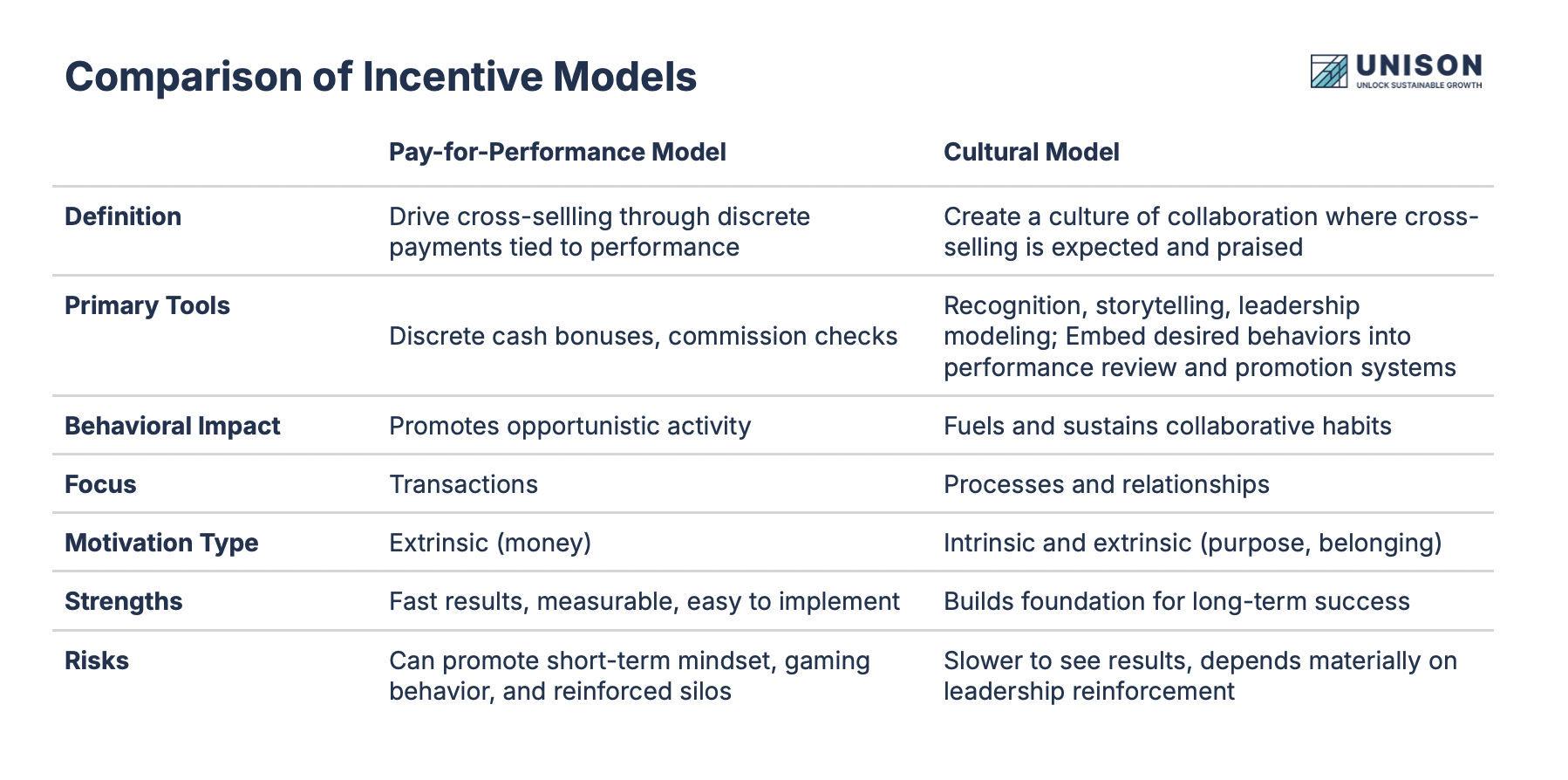
Monetary rewards can spark immediate activity. They are easy to set up and require little leadership effort. However, they tend to treat cross-selling as a transaction, not as a relationship, sending the message that the firm doesn’t expect collaboration unless it is paid for. They can reinforce gaming behavior, like pushing unnecessary introductions to the client. Ironically, they can reinforce silos by codifying concepts of “My Client”, “Your Commission” and emphasizing revenue credit. Finally, they can lead to a short-term mindset, resulting in an aversion to pursuing deeper knowledge about other services unless real money is on the table.
I once worked with a consulting firm where the announcement of a renewable, six-month cross-selling commission program created more buzz than any other internal news that year. MDs dropped what they were doing after the announcement and talked about it in the hallways. Collaboration started the same day. For months, the firm generated material cross-sales and revenues spiked. The program was simple and required little investment from leadership.
Over time, though, the impact wore off. The commissions started to feel less incremental and more like standard compensation. Notably, most of the payouts went to 1) existing rainmakers or 2) MDs selling recurring projects, not incremental work. The easy opportunities had been captured. To keep growing cross-sold revenue, average MDs needed to invest significant effort without a guaranteed commission outcome. Without other forms of encouragement, many remained in their silos.
Cultural (Non-Monetary) Model Takes Longer but Lasts
The cultural model embeds collaboration into the firm’s core values and hardwires cross-selling into the processes that define success. This approach takes more effort and time to set up, and results appear more slowly. However, it builds a foundation for long-term success by embedding cross-selling into the fabric of the firm. It encourages MDs to invest energy into collaboration, learn other services, and prioritize what is best for the client, even when no immediate financial reward is attached.
I saw this transformation firsthand when working with a valuation advisory firm. Initially, dozens of Managing Directors were skeptical about the value of cross-selling. It wasn’t that they were opposed to it, they simply weren’t convinced that it would benefit them. They had heard stories of cross-selling gone wrong. They were unsure if it was worth their time, especially given the firm’s revenue credit policy that left the impact of cross-selling on key metrics unclear.
Once we introduced transparent changes, attitudes began to shift. Leaders began talking about cross-selling constantly. Team calls, dashboards, and firm-wide communications started spotlighting collaboration successes. Promotion candidates were interviewed about their cross-selling success and collaborative behavior. Highly visible firm investments including cross-selling training programs, new collaboration features in the CRM, and a revamped revenue credit policy clarifying roles on cross-sold projects, caused cross-selling to be a daily topic. In just three years, we tripled the firm’s cross-sold revenues. More importantly, we had built systems and processes to ensure success would continue, reliably.
Conclusion
Non-monetary incentives are stronger drivers of the lasting behavior change that increases enterprise value.
At the end of the day, the best way to motivate MDs to prioritize cross-selling is to make cross-selling visible and valued everywhere. When MDs see cross-selling celebrated at gatherings, highlighted in emails, and embedded into everyday conversations, they become champions themselves, cascading the message to the next class. This raises the value of the firm, both in the eyes of investors and top talent. Monetary incentives can help jump-start a plan or provide short-term results, but a non-monetary, cultural model will drive lasting change and the highest values.